
Revision is here: a personal practice bank for every student

A new student-led feature is now live on Mathspace. Every question a student hasn't yet answered correctly becomes part of a personal practice bank they can return to whenever they have a few minutes.
Every term, the same pattern plays out in many maths classrooms. A student finishes a lesson getting most things right and a few things wrong, the class moves on to the next topic, and the questions they didn't quite get fade quietly into the background. By the time the same idea shows up on a test six weeks later, the misconception is still sitting where it always was and the student is still tripping over it.
Revision is a new student-led feature on Mathspace that helps your students return to those questions while the gap is still recent enough to close. Mathspace keeps a running bank of every question a student hasn't yet answered correctly, and gives them simple, low-friction ways to work through that bank whenever they have a few minutes spare.
How revision works
Mathspace tracks every question a student attempts but doesn't yet get right across tasks, textbook practice and adaptive work. Those questions sit in a personal revision bank that updates automatically as students learn. When a student opens revision, the bank decides what they should work on next — drawn from their own history, not from a generic worksheet.
This means your students don't need to remember which ideas they were shaky on three weeks ago, and they don't need to plan a revision schedule. They open Mathspace, see how many recent mistakes are waiting in their bank, and start working through them. When they answer a revision question correctly, it is retired from the bank for good. When they get it wrong, the question rolls forward and shows up again later, ready for another go.
Where students find revision
We've built two entry points so students can choose between a quick general warm-up and focused practice on a specific area.
Quick review on the dashboard
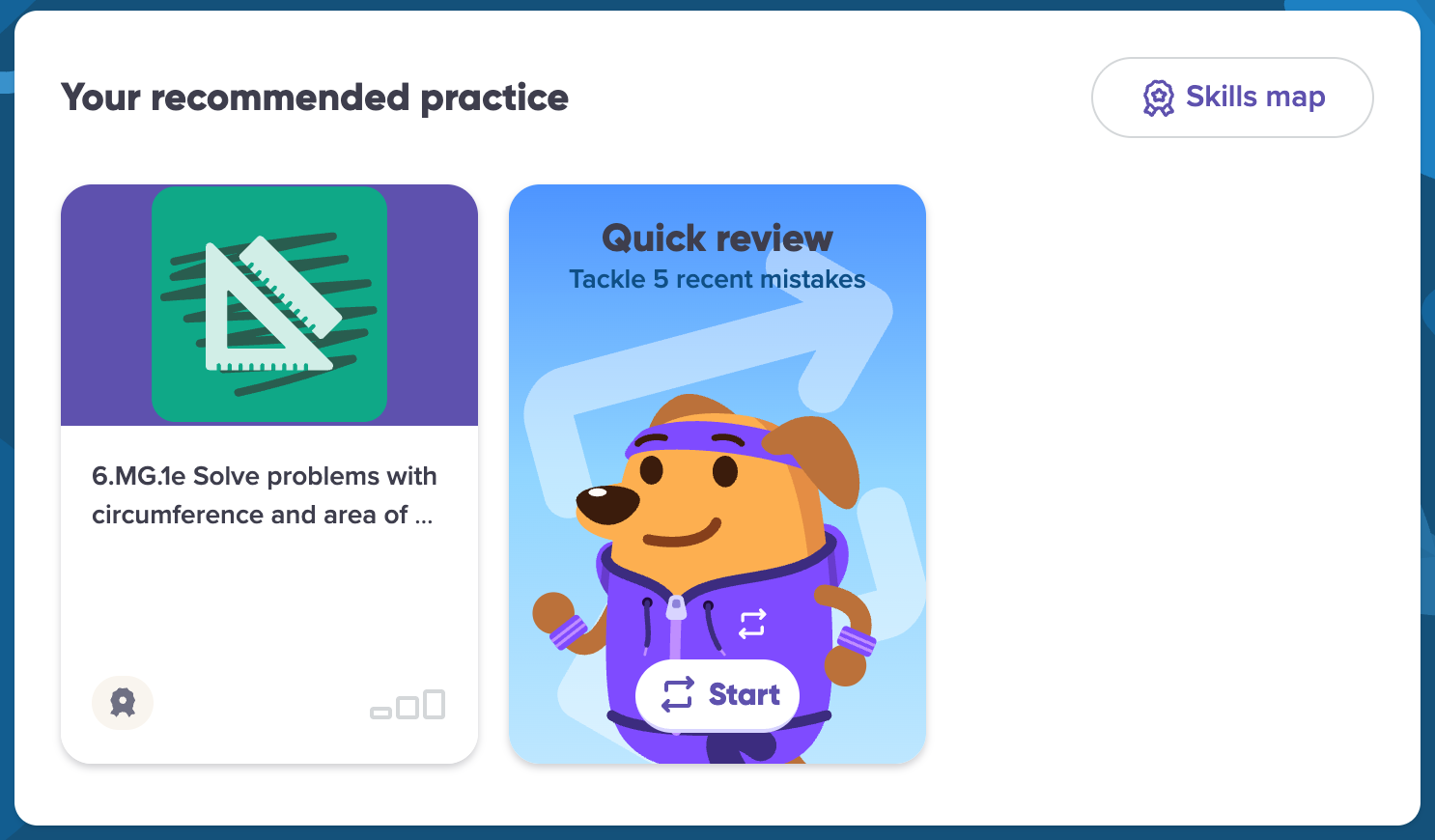
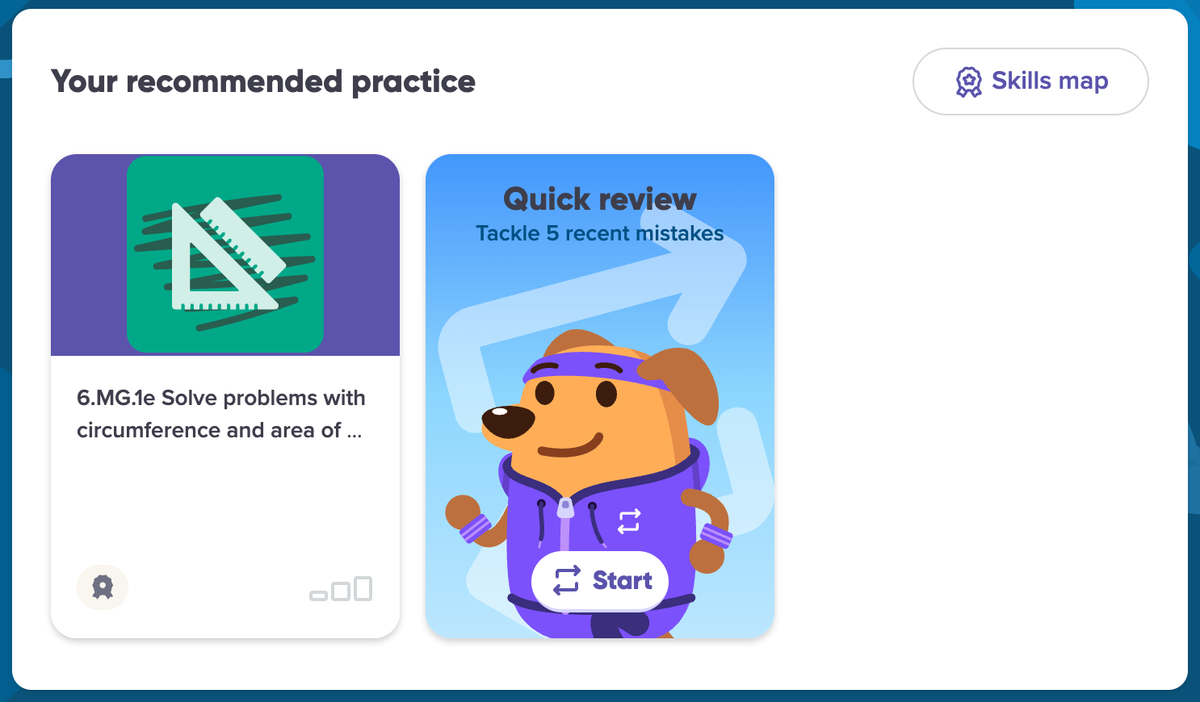
The fastest way in is right on the student's home dashboard. Under Your recommended practice, they'll find a quick review card that pulls five recent questions from the bank and turns them into a short, self-contained session. It's the kind of thing a student can finish before class, on the bus home, or as a five-minute reset between bigger pieces of work. It's the lightest possible commitment, which is why we expect students to reach for it most often.
Targeted revision in the textbook
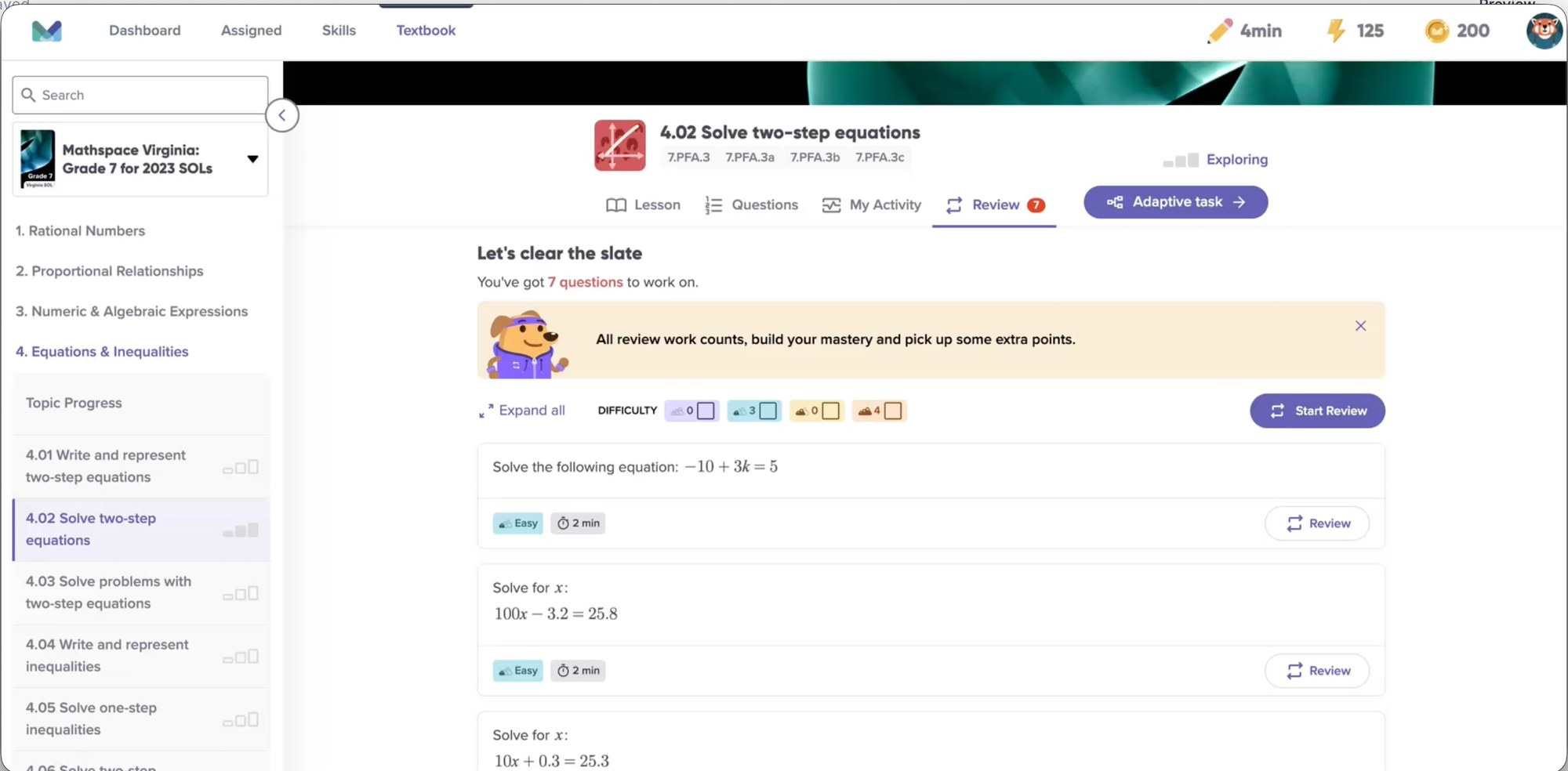
When a student knows where they want to focus — before a unit test, after a lesson where things didn't quite click, or at the end of a topic — they can open any subtopic and find a Review tab alongside Lesson, Questions, and My Activity. A small badge on the tab shows them how many revision questions are waiting in the bank for that specific area, so they can drill into the gap they care about most.
Inside a revision workout
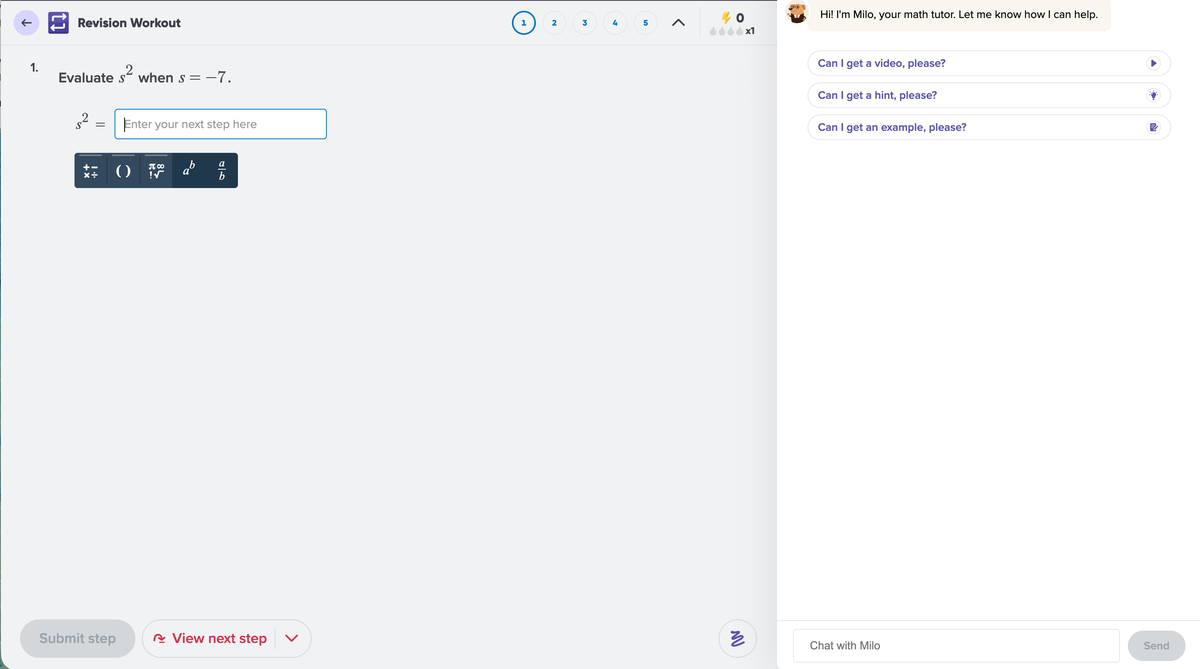
Once a student starts a session, the experience feels familiar. It uses the same step-by-step workout flow students already know from their tasks, with Milo on hand for hints, examples, and worked-solution videos whenever they get stuck. There's nothing new to learn — the only thing that changes is where the questions are coming from.
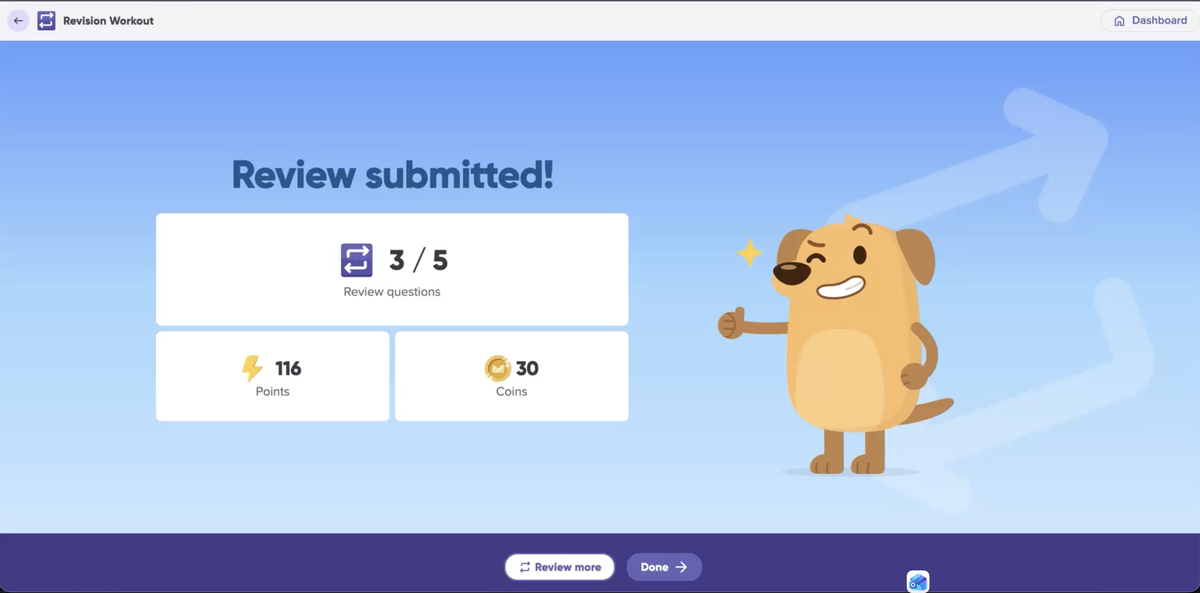
At the end of every session, students see a short summary that shows how many questions they got right, the points they earned and the coins they collected. The questions they nailed are permanently retired from the bank. The ones they didn't quite get this time roll forward, ready for another go later.
Why revisiting wrong answers works
The pedagogy behind revision is well established. When a student returns to a question they got wrong, three of the most evidence-backed learning mechanisms come into play at once.
The first is retrieval practice: pulling an answer back from memory is far more effective for long-term learning than re-reading notes or watching a worked example. The effort of remembering is itself the learning. The second is spaced repetition: coming back to a tricky idea days or weeks later, when it's just on the edge of being forgotten, builds far stronger retention than studying it all in one sitting. The third is desirable difficulty: questions a student got wrong the first time are calibrated by definition to where their understanding is wobbly — challenging enough to be productive, familiar enough not to overwhelm.
In other words, the questions a student got wrong yesterday are quite literally the most valuable practice they can do today. Revision makes that practice the path of least resistance.
Coming soon: teacher-assigned revision
ROLLING OUT SHORTLY
Revision today is student-initiated, and we've already seen strong engagement from students choosing to use it on their own. We know, though, that for revision to become a genuine habit, it usually needs a nudge from a teacher.
Our next release will let you assign revision as part of your regular task setting. Alongside a homework set, you'll be able to add a short, personalised revision warm-up drawn from each student's own bank — ideally on questions related to the new homework topic. Every student in the class will warm up on the questions they got wrong, rather than working through a one-size-fits-all worksheet, and they'll arrive at the new task with the relevant prior ideas already loaded back into working memory.
We'll share more on teacher-assigned revision when it ships.
How to get started
Revision is live now for every student with a Mathspace account. There is nothing to enable on your side — students will see the quick review card on their dashboard, and the Review tab inside every subtopic of their textbook, the next time they log in.
If you'd like the full walkthrough, including how to find a student's revision activity in their progress reports, head to our help centre article on revision.