
How Can Maths Leaders Build a Culture of Innovation in the Age of AI?
What can maths leaders learn from 15 years of building an education company? Mathspace founder and CEO Mohamad Jebara reflects on his workshops at the Qatar STEM Leadership Summit 2026, sharing five lessons on motivating teams, encouraging innovation and navigating AI in maths education.

I recently ran two workshops at the Qatar STEM Leadership Summit 2026 for Heads of Mathematics, IT leaders and maths teachers. We explored a question I think about constantly: how do we lead maths departments, and teach maths itself, in a world where AI is improving at a staggering pace?
I started with a confession. I’ve never had any formal leadership training, and I don’t have an MBA. I’m an accidental leader. None of the ideas I shared are mine. They’re frameworks I’ve read about, tried at Mathspace and kept because they worked. Together, they’ve helped us stay innovative and responsive to the teachers and students we serve over many years, even as our team has grown.
Many of the challenges a Head of Mathematics faces are the same ones I’ve faced: how to motivate people, how to give them freedom without losing direction, and how to make room for new ideas when everyone is already busy. Here are five lessons I’ve learned along the way.
1. How Can Servant Leadership Build More Motivated Maths Teams?
When I first found myself managing people, I assumed my job was to have all the answers. I’ve since learned that the most useful thing I can do is create an environment where others can do their best work.
Servant leadership changed my thinking most. A traditional hierarchy puts the leader at the top and customers at the bottom. Servant leadership flips that pyramid: customers sit at the top, supported by the people who serve them, with the leader at the base. I think that inversion is a big part of why we’ve stayed close to teachers and students. When the people nearest to customers are trusted to act on what they hear, an organisation responds far faster than any one leader could.
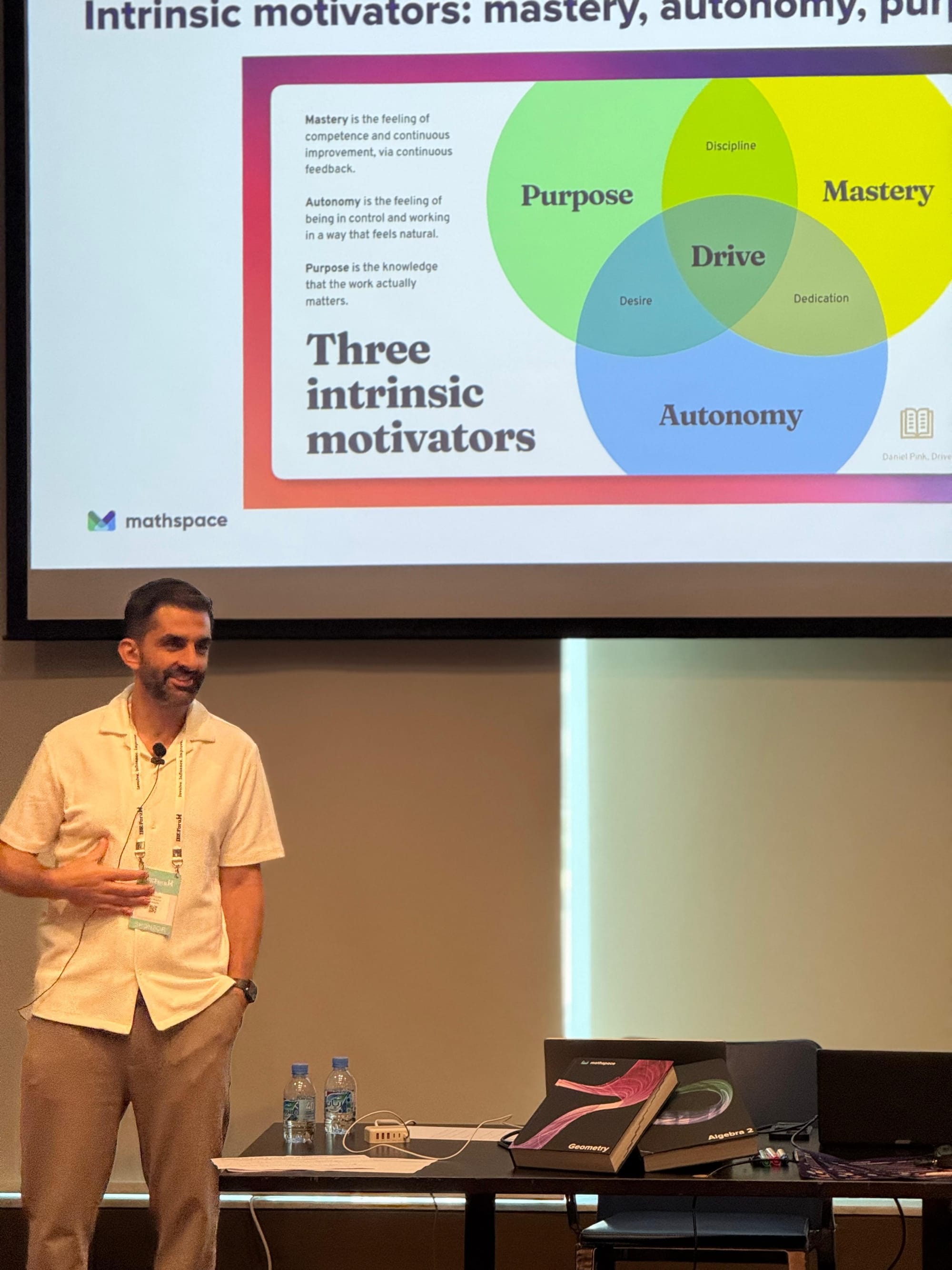
It starts with a shared mission. Ours is that every student can excel at maths with the right help at the right time. From there, I’ve leaned on Daniel Pink’s three intrinsic motivators from Drive:
- Purpose: Knowing the work actually matters.
- Mastery: Feeling competent and continuously improving.
- Autonomy: Being trusted to work in a way that feels natural.
For a Head of Mathematics, this could mean building a shared vision for student learning, then trusting teachers to choose the approaches that suit their classrooms.
2. How Can Maths Departments Balance Alignment, Autonomy and Accountability?
Autonomy sounds wonderful until everyone heads off in a different direction. I learned the hard way that autonomy without alignment is a disaster.
A model adapted from Henrik Kniberg’s writing on Spotify’s engineering culture helped me here. High alignment with low autonomy creates a conformist culture. High autonomy with low alignment creates chaos. What we aim for is both: a leader who says “we need to cross the river” and a team trusted to figure out how. The third piece is accountability, where teams hold themselves to account and reflect openly and honestly on what is and isn’t working.
We also try to treat everything as an experiment. In one A/B test, we changed the help buttons in our AI tutor, Milo, into conversation starters such as “Can I get a hint, please?” Students who saw the new version were 30% more likely to seek help, and their accuracy after seeking help rose from 53% to 73%. A simple change had an outsized impact, and I wouldn’t have predicted it without measuring it.
Departments can work the same way: trial a new routine with a couple of classes, measure what matters, then share it more widely if it works.
3. How Can School Leaders Create a Culture of Innovation?
Innovation needs an environment where people feel safe enough to try new things. Google’s Project Aristotle, a two-year study of 180 teams, found the biggest factor in team effectiveness was psychological safety: feeling safe to take risks and be vulnerable in front of each other.
At Mathspace, we build that safety through protected learning time, regular hackathons, recognition that is timely and public, and a culture of candid feedback based on Kim Scott’s Radical Candor: care personally while challenging directly.
In the workshop, attendees practised this in groups of three, giving feedback to a fictional colleague who hadn’t assigned the department’s weekly formative quiz. The hardest lesson to practise is that when feedback lands badly, the answer is usually to care more personally, not to challenge less directly.
For maths departments, this might mean giving teachers time to trial new strategies, sharing what is and isn’t working at regular meetings, and recognising experimentation, not just success.
4. How Can AI Create New Opportunities for Maths Teachers?
My own “aha” moment came in March 2023, when GPT-4 was released. I messaged our whole team saying it would change everything, gave everyone who wanted one a ChatGPT account, and asked them to start experimenting and sharing. Looking back, the technology mattered less than the culture we already had. Because people felt safe to experiment, they did.
AI is still improving at an extraordinary pace, and I don’t think leaders can keep up by reading about it. You have to create the space for experimentation. In the workshop, I suggested hackathon projects departments could try:
- Generating practice problems with real-world contexts.
- Using AI to help grade handwritten worksheets.
- Designing activities for diverse learners, including English language learners and students who need extra support.
- Planning engaging group activities.
At Mathspace, one of our UX researchers built a teacher feedback dashboard in a single day using an AI tool. Another hackathon project, an AI Handwriting Transcriber, is now on our roadmap. It lets teachers whose students work on paper still get a digital report.
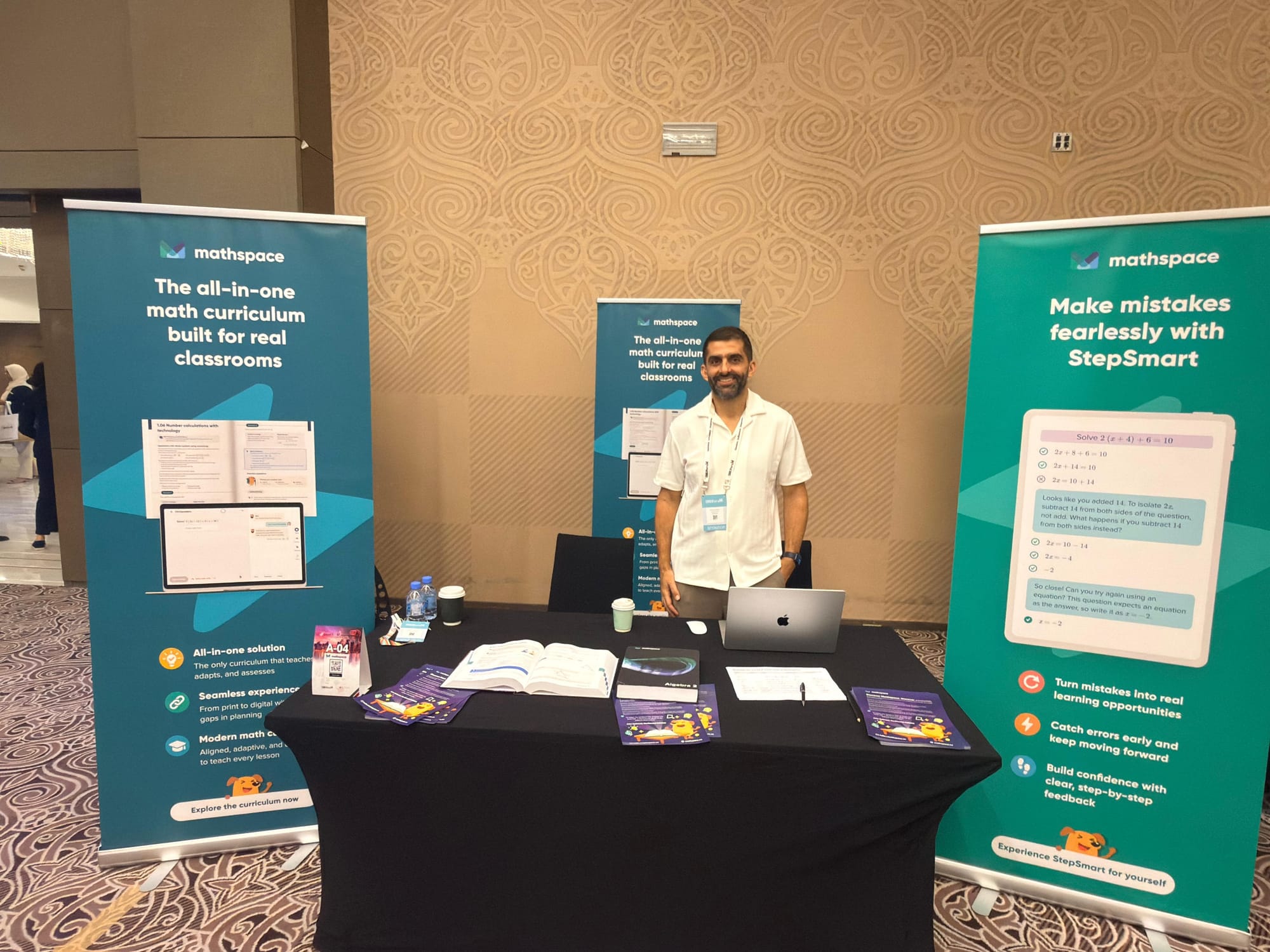
I also demonstrated Mathspace and MiloAI, showing how adaptive technology and AI tutoring can support students as they work through problems.
The key is intentional use. AI should complement effective teaching, not replace the instruction, discussion and thinking that happen in the classroom.
5. Why Do Students Still Need to Learn Maths When AI Can Solve Problems?
I closed with the question I’m asked most often: do we still need to learn maths when AI is better than us at everything?
My answer is yes. Maths develops reasoning, critical thinking and problem-solving. Students still need the understanding to interpret AI’s answers, question them and apply what they know to unfamiliar situations.
I also shared a line from Francis Su, former president of the Mathematical Association of America: “We study mathematics for play, for beauty, for truth, for justice and for love.” None of those reasons disappear when a machine can do the calculation.
How Can Maths Leaders Put These Lessons Into Practice?
None of this requires transforming a department overnight. I adopted each of these frameworks gradually and imperfectly, and I’m still learning. It starts with a shared vision, trusting teachers and making room to experiment.
More than 50 educators joined the two workshops, and many left planning to bring clearer goals, more autonomy and more experimentation back to their own teams. If there’s one lesson I’d leave you with, it’s this:
Meaningful innovation starts with people, not technology.
How Can Mathspace and MiloAI Support Your Maths Classroom?
Discover how adaptive practice and AI-powered tutoring can complement effective teaching and support students as they develop their mathematical understanding.