From Self-Doubt to Champions: Inside Carey Baptist College Forrestdale’s Approach to Maths Engagement
Discover how Carey Baptist College Forrestdale is building student confidence and engagement in maths through NBA Math Hoops, while Head of Maths Nathan Yuan uses Mathspace to identify learning gaps, support individual needs and inform teaching decisions.


A group of students nearly walked away from a maths competition before it had even begun.
They doubted their chances of success, faced challenges within their friendship group and decided it was easier not to participate.
But at Carey Baptist College Forrestdale, Head of Maths Nathan Yuan wasn’t ready to let the story end there.
With some encouragement, a little persuasion and even the promise of a free seating plan, the students decided to give the competition another chance.
They went on to win the tournament.
It’s a story that raises an interesting question for maths educators: how often do students miss opportunities to succeed, not because they lack the ability, but because they lack the confidence to try?
At Carey Baptist College Forrestdale, experiences like this are part of a broader effort to engage students in mathematics, recognise their individual learning needs and create opportunities for them to grow.
From an interschool NBA Math Hoops tournament to using Mathspace to better understand student progress, the school’s story offers a look at how different approaches can contribute to meaningful maths learning.

What Happens When Maths Moves Beyond the Classroom?
For Nathan, the idea of bringing basketball into maths learning began at a Mathematics Association of Western Australia (MAWA) conference.
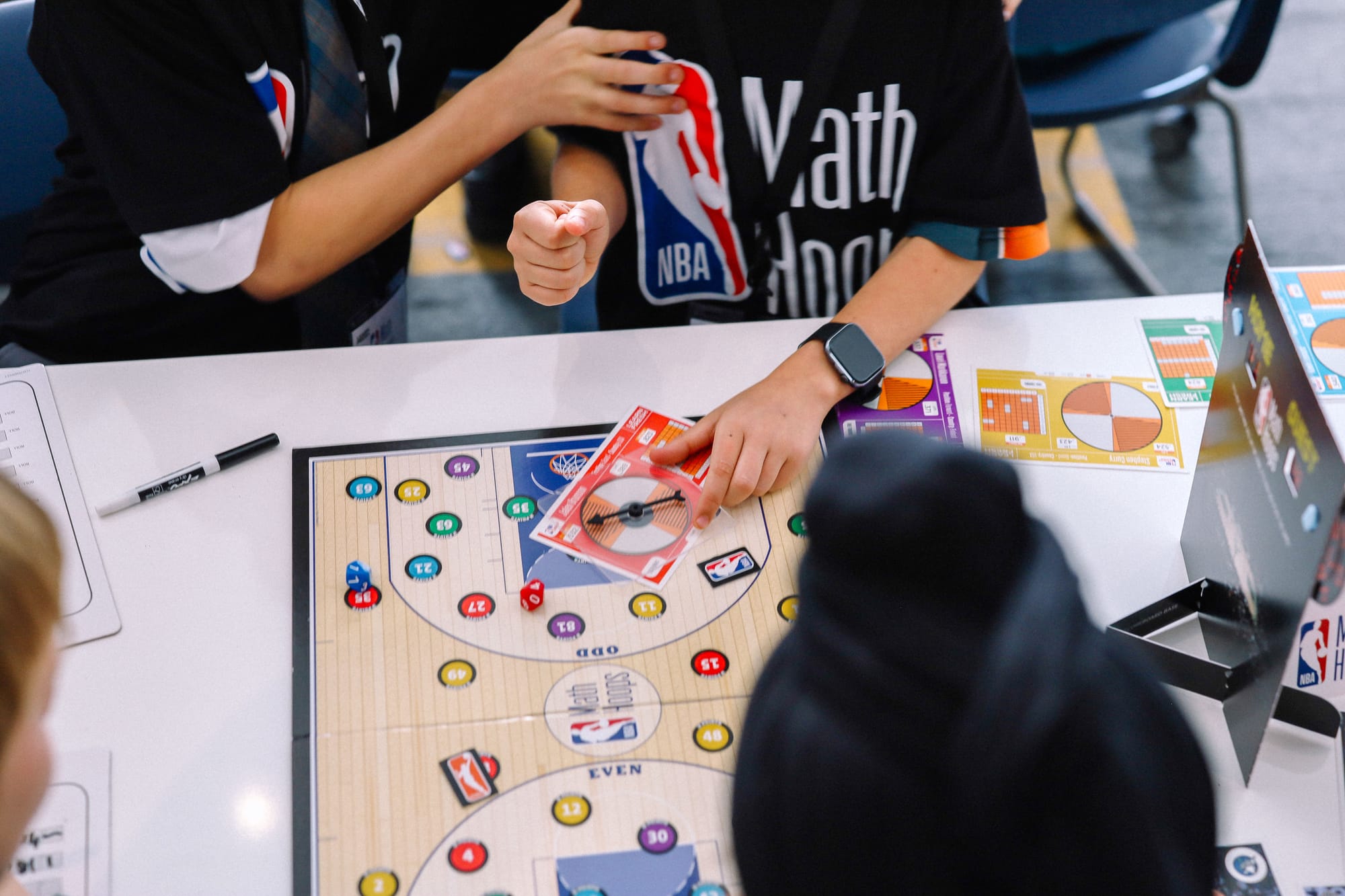
As a basketball and NBA enthusiast, he was immediately drawn to NBA Math Hoops, an educational programme that combines basketball-inspired gameplay with mathematical thinking.
Rather than leaving the idea at the conference, Nathan attended professional development sessions, connected with the programme’s organisers and worked towards bringing the experience to his students.
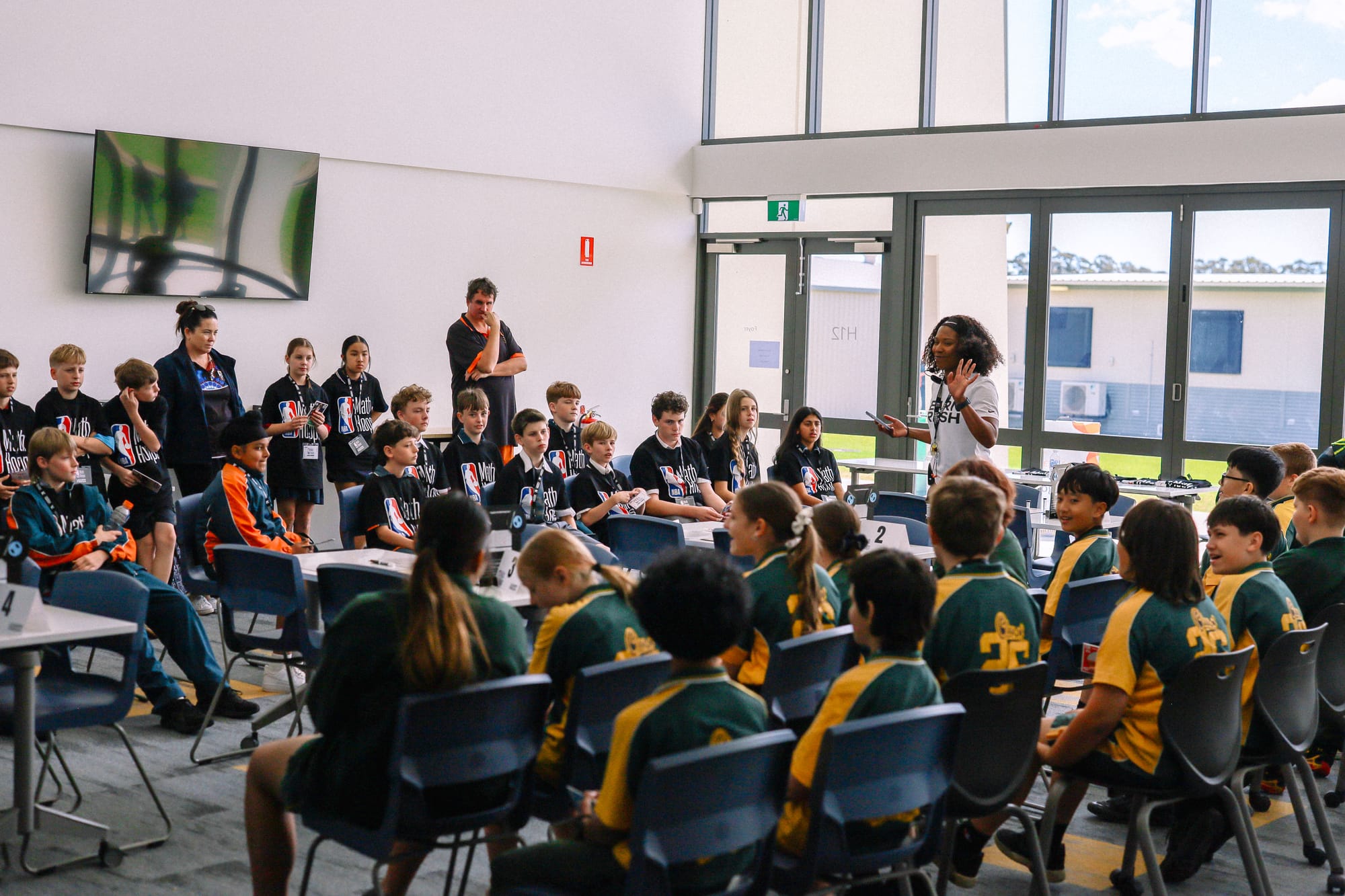
That eventually led to Carey Baptist College Forrestdale hosting an interschool NBA Math Hoops tournament.
The event gave students an opportunity to engage with mathematics in a different environment, bringing together competition, teamwork and problem-solving.
For teachers, activities like these can provide a valuable change from familiar classroom routines.
They create opportunities for students to approach mathematical thinking through experiences that connect with their interests.
But while the tournament brought maths into a different setting, one of its most memorable lessons had less to do with the game itself.
It came from the students who almost didn’t participate.

What If the Biggest Barrier to Success Isn’t Mathematical Ability?
Teachers regularly encounter students who hesitate to participate, avoid unfamiliar challenges or decide they’re unlikely to succeed before they’ve started.
But how often do we consider what’s driving that hesitation?
During the NBA Math Hoops tournament, Nathan encountered a group of students who initially withdrew because they doubted their chances of winning and were experiencing friendship challenges.
Their decision wasn’t necessarily a reflection of their mathematical ability. Their confidence and circumstances were also influencing their willingness to participate.
Nathan encouraged them to reconsider, finding ways to motivate them to give the experience another chance.
His approach even included the promise of a free seating plan.
Eventually, the students agreed to return.
And they went on to become tournament champions.
Their achievement was worth celebrating, but the journey leading up to it offers an equally valuable lesson.
The students who initially doubted themselves had taken on a challenge they were prepared to walk away from.
They had given themselves another opportunity to participate, persevere and discover what they could accomplish.
For maths teachers, it’s a reminder that supporting students isn’t always about explaining another concept or providing additional practice.
Sometimes, it’s about recognising when a student needs encouragement to take the next step.
And while confidence can help students engage with learning, teachers also need to understand what’s happening once students begin participating.

What Does Student Engagement Really Tell Us About Their Learning?
Seeing students actively participating in maths is encouraging.
But engagement alone doesn’t always reveal whether students have understood a concept, where they’re experiencing difficulties or whether they’re ready for a greater challenge.
That’s a challenge teachers face in classrooms where students bring different strengths, abilities and levels of understanding.
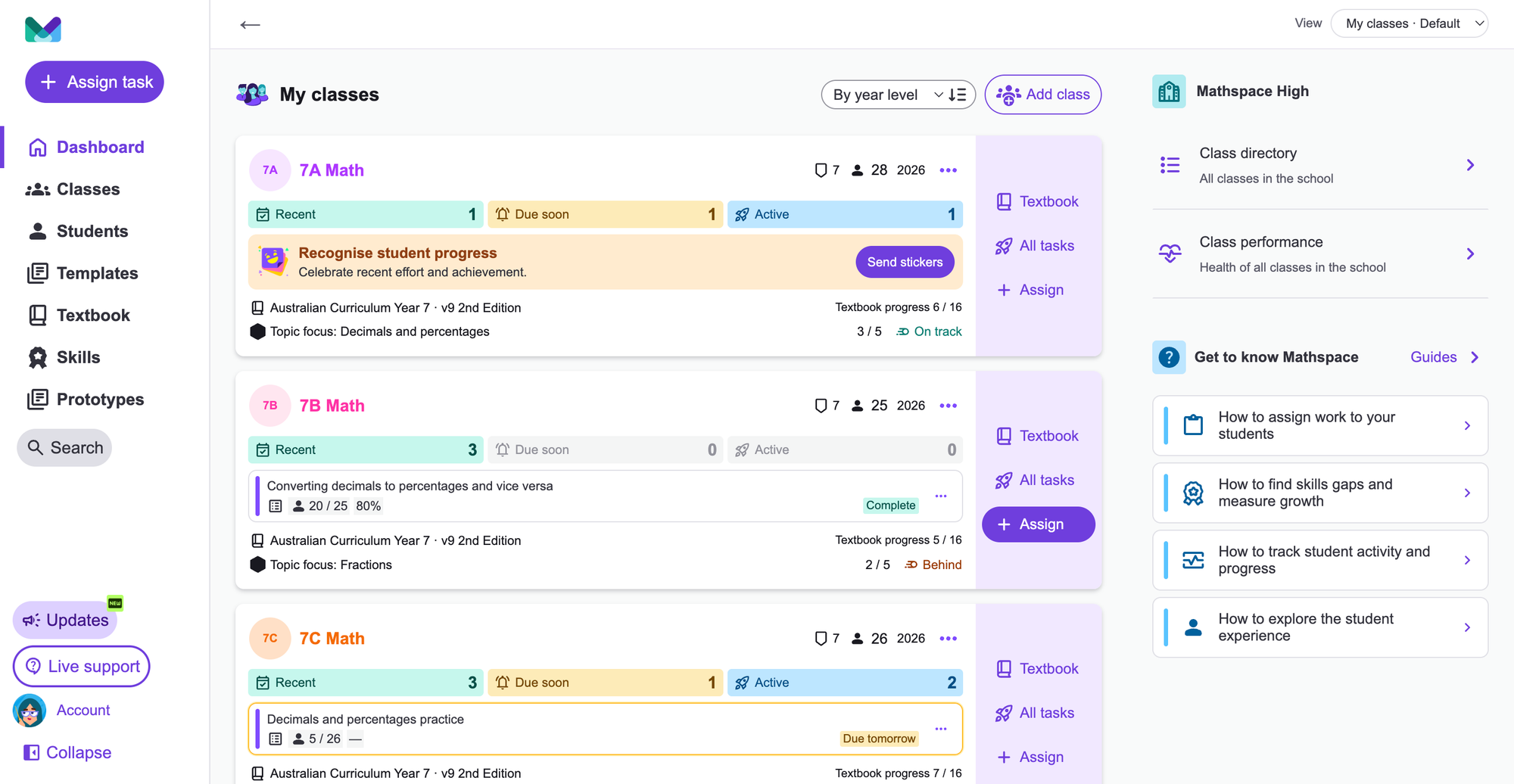
At Carey Baptist College Forrestdale, Nathan uses Mathspace as part of his everyday teaching to support student engagement and gain a clearer understanding of individual learning needs.
He sees student engagement as one of the platform’s strengths.
“Students love Mathspace, and it shows in how engaged they are. It’s also a great way for high-ability students to extend themselves.”
Nathan Yuan, Head of Maths, Carey Baptist College Forrestdale
For Nathan, Mathspace provides opportunities for students to practise mathematics while also helping him recognise where they may need additional support or extension.
This distinction matters.
A student can be engaged in an activity while still struggling with an underlying concept. Another may complete their work confidently but need opportunities to extend their understanding.
Recognising these differences helps teachers move beyond simply observing participation towards understanding individual progress.
And that brings us to another important question.
Are We Collecting Student Data or Actually Using It?
Teachers have access to more information about student learning than ever before.
But having data available doesn’t automatically make it useful.
The real value comes from being able to interpret that information and use it to make meaningful teaching decisions.
For Nathan, this is one of Mathspace’s most valuable features.
“For me, the real win is the data. It pinpoints each student’s weaknesses and gaps, and it presents them clearly enough for teachers to act on straight away.”
Nathan Yuan, Head of Maths, Carey Baptist College Forrestdale
Rather than relying solely on a general picture of class performance, Nathan can use these insights to identify areas where individual students may need additional support.
They also help him recognise students who are ready to extend their learning.
For teachers managing classrooms with diverse learning needs, being able to identify these differences can help inform what happens next.
Which concepts need revisiting? Which students may benefit from additional practice? Who is ready for a new challenge?
The goal isn’t simply to collect more student data. It’s to turn that information into teaching decisions that support learning.
At Carey Baptist College Forrestdale, Mathspace provides Nathan with another way to understand his students and respond to their progress.
But he also recognises that digital tools are only one part of effective maths teaching.
Does More Technology Really Mean Better Maths Learning?
As schools continue to navigate conversations about screen time, the role of technology in maths education remains an important consideration.
Digital tools can support practice, provide feedback and offer teachers valuable insights.
But does that mean more technology always leads to better learning?
Nathan doesn’t see it that way.
While he values Mathspace for its engagement, extension opportunities and learning data, he also emphasises the importance of traditional approaches.
“That said, we need to balance screen time with pen and paper, especially with screen use getting such a bad rap in the media.”
His perspective reflects a broader question for maths educators: rather than choosing between digital and traditional methods, how can we make more intentional decisions about when each approach adds value?
At Carey Baptist College Forrestdale, Nathan’s experiences provide examples of different approaches serving different purposes.
NBA Math Hoops creates opportunities for students to engage with mathematical thinking through hands-on, basketball-inspired activities.
Mathspace supports maths practice while providing insights that help Nathan understand individual learning needs.
And pen-and-paper activities remain an important part of developing and demonstrating mathematical understanding.
These approaches don’t need to compete with one another.
Meaningful technology use isn’t necessarily about increasing screen time. It’s about understanding when a tool can genuinely support teaching and learning.
What Can a Basketball Tournament Teach Us About Maths Education?
At first glance, an NBA Math Hoops tournament and a digital maths learning platform might seem like two very different approaches.
And in many ways, they are.
One creates opportunities for students to engage with maths through basketball-inspired competition.
The other helps teachers support everyday maths practice and better understand students’ individual learning needs.
But Carey Baptist College Forrestdale’s story highlights something they have in common.
Both demonstrate the importance of recognising what students need to engage with mathematics and make progress.
For the students who initially withdrew from the tournament, that meant encouragement and another opportunity to participate.
For Nathan, using Mathspace means having access to insights that help him identify learning gaps, support students who are struggling and extend those who are ready for a challenge.
And for maths educators more broadly, the story is a reminder that effective teaching often involves drawing on different approaches to meet different needs.
Not every school will host a basketball-inspired maths tournament.
But every teacher encounters moments when a student needs encouragement, additional support or an opportunity to approach learning differently.
Sometimes, those moments can make a lasting difference.
After all, the students who eventually won the tournament almost didn’t participate.
Their story is a reminder that sometimes the first step towards success is simply having the confidence to try again.
Congratulations to Nathan Yuan and the students at Carey Baptist College Forrestdale for their achievements and their commitment to making maths learning engaging and meaningful.